
When budgeting for your next construction or utility project in the Moreton Bay region, the excavation line item might seem straightforward. But the true cost of
moving earth can extend far beyond simple hourly rates, especially in an area with a complex web of underground assets. Choosing the right excavation method isn’t just about getting the job done; it’s about protecting your budget, timeline, and reputation.
This analysis is for construction project managers and utility asset owners across Moreton Bay. We’ll provide a framework to help you look past the surface costs and
compare the total cost-effectiveness of hydro vacuum excavation against traditional methods, focusing on risk mitigation, reinstatement savings, and overall project value specific to our South East Queensland environment.
Understanding Your Excavation Options
Before diving into a cost comparison, it’s important to understand the fundamental differences between the main excavation approaches.
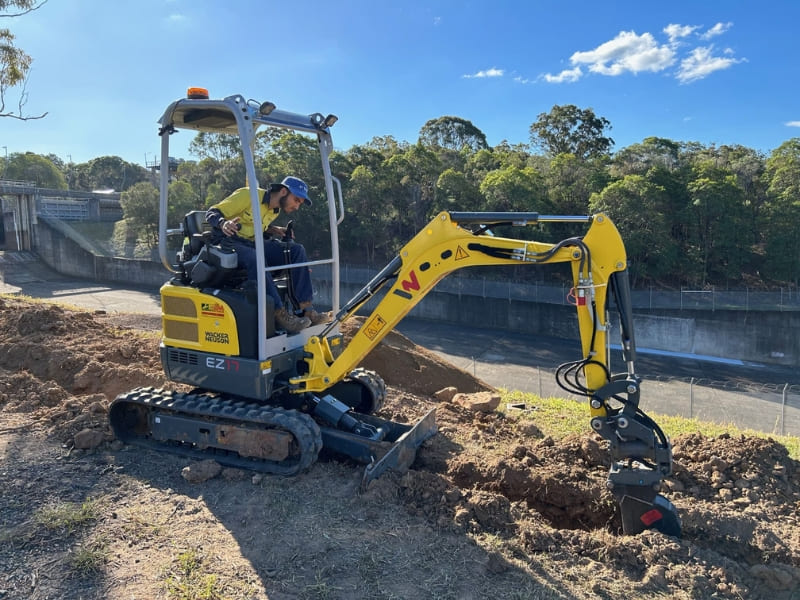
- Traditional Excavation: This typically involves mechanical equipment like backhoes or excavators. It’s often seen as a quick way to move large volumes of soil. While effective in open, clear areas, traditional methods carry a higher risk of damaging underground utilities, especially in congested urban environments or where asset mapping is incomplete. This can lead to significant safety hazards, costly repairs, and project delays.
- Vacuum Excavation (Hydro Excavation): This is a non destructive digging (NDD) technique. Hydro vacuum excavation uses pressurised water to break up soil, which is then simultaneously removed by a powerful vacuum system and stored in a debris tank. It’s a precise and controlled method, ideal for safely exposing underground utilities, potholing, and working in sensitive or tight spaces. The key benefit is a dramatically reduced risk of utility strikes, making it a much safer and often more reliable choice.
Beyond the Hourly Rate: A Fuller Cost Comparison
A simple comparison of hourly hire rates for excavation equipment doesn’t tell the whole story. To understand the true value, Moreton Bay project managers need to
consider several factors where vacuum excavation often provides significant, quantifiable advantages.
- Precision and Accuracy: Vacuum excavation allows for surgical precision. You remove only the material necessary, which is vital when working around delicate fibre optic cables or high pressure gas lines. Traditional methods are far less precise, often resulting in over-excavation, which adds to spoil removal and reinstatement costs.
- Safety and Risk Mitigation: This is where vacuum excavation truly shines. The risk of striking and damaging underground utilities is drastically lower compared to mechanical digging. In South East Queensland, with its dense network of services, avoiding a utility strike isn’t just a safety priority; it’s a major cost saving. The direct costs of repair are just the beginning; indirect costs like project delays, regulatory fines, reputational damage, and community disruption can be astronomical. As highlighted by reports like the “Economic Assessment of Utility Strikes in Australia” (referenced in research by AIHS and BYDA), these incidents carry substantial economic and social burdens.
- Speed and Project Timelines: While traditional excavation might seem faster for bulk earthmoving in open areas, vacuum excavation can significantly speed up projects in specific scenarios. When working around known utilities, the careful, slow approach needed with a backhoe can be time consuming. Vacuum excavation’s precision means less time spent on cautious manual exposure and quicker verification of assets. This leads to faster overall project completion in many utility related tasks.
- Environmental Considerations and Reinstatement: Vacuum excavation creates less ground disturbance. The targeted nature means smaller excavation sites, less spoil to manage, and consequently, reduced reinstatement costs. Backfilling and surface restoration are simpler and cheaper when the initial excavation is neat and contained. This is particularly beneficial in urbanised parts of Moreton Bay or environmentally sensitive areas.
- Total Project Cost Factors: When you factor in reduced labour for spotting, lower risk of damage repair, decreased spoil disposal volumes, and quicker, less expensive reinstatement, the total project cost using vacuum excavation can be significantly lower than traditional methods, even if the initial hourly hire rate appears higher.
The Moreton Bay & South East Queensland Context: Why Local Factors Are Crucial
The specific conditions in Moreton Bay and the broader South East Queensland (SEQ) region make a strong case for the benefits of vacuum excavation. Our rapidly
growing communities mean an increasingly dense and often complex network of underground utilities.
The “true cost of damages to underground services” as detailed by industry sources like GeoScope Locating and Utility Magazine, isn’t just about fixing a pipe; it’s about the cascading effects. In SEQ, a utility strike can halt major infrastructure projects, disrupt essential services to homes and businesses, and incur substantial penalties. The accuracy of utility maps can also be a challenge, making the non destructive nature of vacuum excavation an invaluable risk management tool. Furthermore, reinstatement requirements in developed areas can be stringent and costly, favouring methods that minimise disturbance.
An ROI Framework for Your Moreton Bay Project
To make an informed decision, consider this framework for comparing the potential
return on investment:
1. Estimate Traditional Method Costs:
- Machine and operator hire (hours/days).
- Labour costs (including spotters, manual digging around services).
- Fuel consumption.
- Potential cost provision for utility strikes (based on risk assessment and historical data for your area).
- Spoil transport and disposal costs.
- Full reinstatement costs (materials, labour, time).
- Estimate Vacuum Excavation Costs
— Service hire (hourly/daily rates, including operator and equipment).
— Time on site (often less for specific tasks like potholing).
— Spoil disposal costs (often less volume, but factor in wet spoil if applicable).
— Reduced reinstatement costs due to minimal disturbance. - Quantify Risk Mitigation Value: This is key. What is the potential cost of a
utility strike on your specific Moreton Bay project? Consider direct repair
costs, project delay costs (your team’s downtime, penalties), and potential
fines. Even a conservative estimate of avoiding one significant strike can
make vacuum excavation highly cost effective. - Factor in Time Savings Value: If vacuum excavation allows for quicker and
safer utility exposure or reduces the overall project timeline due to fewer
interruptions or faster reinstatement, calculate the value of this saved time
(reduced overheads, earlier project completion benefits). - Compare Total Value: Look beyond the initial outlay. Consider the total
lifecycle cost of the excavation phase, including the financial benefits of
enhanced safety, reduced risk, and efficiency gains.
When Does Vacuum Excavation Offer the Clearest Advantage?
While every project is unique, vacuum excavation often provides superior value and ROI in scenarios such as:
- Congested Urban Environments: Navigating existing infrastructure in busy streets or tight footprints.
- Areas with Poorly Documented Utilities: When “dial before you dig” plans are unclear or known to be inaccurate.
- Environmentally Sensitive Sites: Minimising ground disturbance near waterways, protected vegetation, or heritage areas.
- Projects Requiring High Precision: Such as exposing services for connection, inspection, or repair.
- Potholing and Service Location: Accurately verifying the depth and location of multiple utilities.
Making the Smart Choice for Your Moreton Bay Excavation Needs
The initial hourly rate for excavation is just one small piece of a much larger puzzle. For construction firms and utility asset owners in Moreton Bay, a thorough ROI
analysis often reveals that the safety, precision, and efficiency of hydro vacuum excavation translate into significant overall cost savings and reduced project risk. By
considering the total cost of ownership, including avoided damages, minimised reinstatement, and faster completion in critical phases, you can make a more
informed and financially sound decision.
At 5th Star Vacuum Excavation, we understand the unique challenges of working within South East Queensland’s infrastructure. Our commitment to safety, reliability,
and clear communication means we partner with you to deliver dependable and efficient excavation solutions.
Need help applying this ROI framework to your next Moreton Bay project or require a site specific assessment? Contact the experienced team at 5th Star Vacuum Excavation today for a no obligation quote and discover how our specialised services can deliver true value.
Frequently Asked Questions (FAQs)
Q1: Isn’t vacuum excavation much more expensive per hour than a traditional excavator?
A1: While the upfront hourly rate for vacuum excavation services can sometimes be higher, it’s crucial to look at the total project cost. Vacuum excavation often leads to savings by drastically reducing the risk of costly utility strikes, minimising spoil removal and reinstatement expenses, and sometimes even shortening project
timelines due to its precision, especially in congested areas. When these factors are considered, vacuum excavation frequently proves more cost effective.
Q2: How much can I realistically save on reinstatement costs in the Moreton Bay area using vacuum excavation?
A2: Savings on reinstatement can be significant. Because vacuum excavation is precise and creates minimal ground disturbance compared to traditional digging, the
area needing restoration is much smaller. This means less backfill material, reduced surface repair (like asphalt or concrete), and less labour. In urbanised parts of
Moreton Bay where reinstatement standards are high, these savings can really add up.
Q3: Is vacuum excavation always faster than traditional methods?
A3: Not for every single task, but it is notably faster and more efficient for specific critical applications. For bulk earthmoving in wide open, clear spaces, a large traditional excavator might move more soil per hour. However, when it comes to safely exposing underground utilities, potholing to verify asset locations, or working
in tight spots with many services, vacuum excavation’s precision avoids the slow, cautious approach needed with mechanical diggers, often leading to quicker completion of those crucial phases and reducing overall risk related delays.
Q4: What specific risks in South East Queensland’s utility network make vacuum excavation a better choice?
A4: South East Queensland, including Moreton Bay, has a dense and often ageing underground utility network. Growth in the region means new assets are constantly being added, sometimes without perfect documentation updates. This increases the risk of striking water mains, gas lines, telecommunications cables, or power lines. Vacuum excavation’s non destructive nature is ideal for navigating this complexity, protecting these vital assets, and ensuring community services aren’t disrupted, which aligns with our commitment to reliable and safe operations.