
Operating a construction or civil project in the City of Moreton Bay means navigating a landscape of stringent environmental regulations. For contractors, project
managers, and developers, ensuring compliance isn’t just about ticking boxes; it’s about protecting the unique local environment, avoiding hefty fines, and maintaining a positive reputation. The waterways and natural habitats of Moreton Bay are precious, and council authorities are, quite rightly, focused on their preservation.
One of the most significant challenges is managing site impact, particularly erosion and sediment control (ESC). The City of Moreton Bay Council has a robust
framework to minimise pollutants, like soil and building waste, entering drains and waterways. Traditional excavation methods, unfortunately, can make this a tough
ask. That’s where hydro excavation, a form of non-destructive digging (NDD), emerges not just as an alternative, but often as a far superior approach for projects
in environmentally sensitive areas like Moreton Bay.
Understanding the Stakes: Key Environmental Regulations in Moreton Bay
Anyone breaking ground in the Moreton Bay region needs to be acutely aware of their environmental obligations. The Council’s Erosion and Sediment Control
Program places a clear responsibility on builders and contractors to prevent pollutants such as soil, sand, cement, and other building materials from washing off
sites and into stormwater drains or directly into local creeks and the Bay itself. This aligns with the broader Environmental Protection Act 1994 (QLD), which mandates a ‘general environmental duty’ – essentially, taking all reasonable and practicable
measures to prevent environmental harm.
The City of Moreton Bay Council actively monitors construction sites, and non-compliance can lead to on-the-spot fines, clean-up notices, or even prosecution.
According to reports, sediment runoff from construction and development is a significant contributor to pollution in Moreton Bay, with Healthy Land and Water
previously highlighting that about one-third of the sediment entering the Bay’s waterways originates from these sources. The sheer volume, once estimated at
nearly 50,000 dump trucks of sediment annually from all urban disturbances, underscores the scale of the issue and the importance of effective site management.
Why Traditional Excavation Methods Can Fall Short in Moreton Bay
Conventional digging techniques, like using backhoes or excavators, have their place, but they inherently involve significant soil disturbance. In the context of
Moreton Bay’s regulations:
- Increased Erosion Risk: Large, open excavations expose more soil to wind and rain, dramatically increasing the potential for erosion and sediment runoff, making ESC compliance challenging.
- Spoil Management Issues: Managing large piles of excavated earth effectively to prevent them from washing away requires considerable effort and space, which isn’t always available.
- Utility Strike Dangers: Traditional digging carries a higher risk of accidentally striking underground utilities such as water pipes, gas lines, or telecommunications cables. Such incidents can cause service disruptions, costly repairs, and environmental contamination from spills.
- Limitations in Sensitive Zones: Working near protected vegetation, established trees, or close to waterways with bulky machinery can cause unintended damage and make adherence to environmental buffers difficult.
These challenges can make it harder for contractors to meet the specific requirements laid out in the MBRC Planning Scheme, particularly in zones designated for environmental management and conservation.
What is Hydro Excavation (Non-Destructive Digging)?
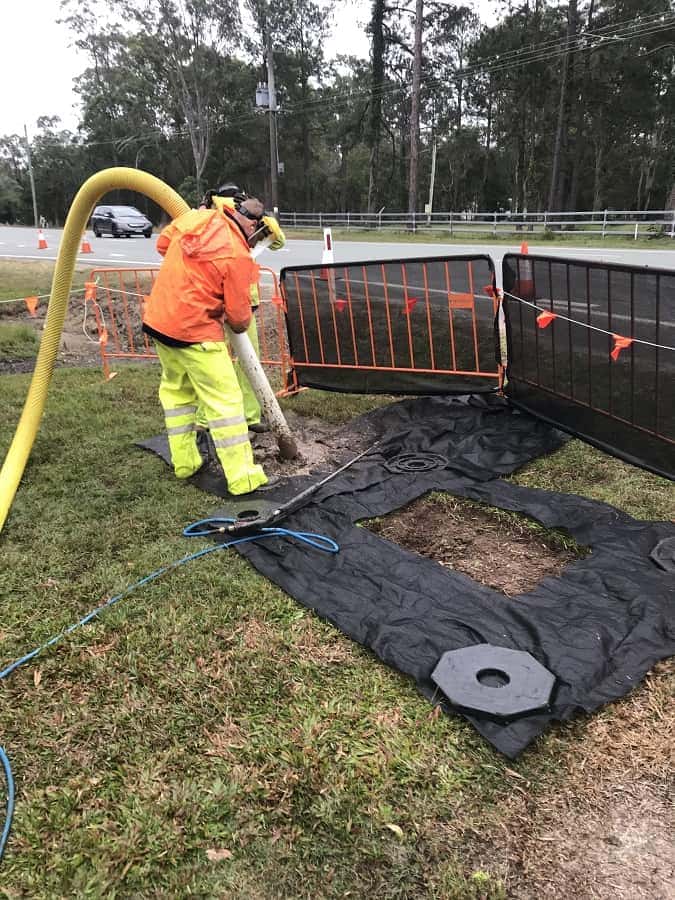
Hydro excavation, also known as vacuum excavation or non-destructive digging (NDD), is a precise and far less invasive method. It works by using highly
pressurised water to liquefy the soil, turning it into a slurry. Simultaneously, a powerful industrial vacuum system sucks this slurry up and stores it in a debris tank
on the truck.
The “non-destructive” aspect is key. Because it uses water and vacuum, it can carefully excavate around delicate underground assets without the brute force of
mechanical diggers. This precision is a game-changer, especially in congested urban environments or ecologically sensitive areas.
Hydro Excavation: Your Solution for MBRC Compliance & Environmental Protection
For civil contractors, utility providers, and construction firms working within the City of Moreton Bay, hydro excavation offers tangible solutions to meet and often exceed environmental compliance requirements.
Ticking the ESC Box: Minimal Soil Disturbance
The pinpoint accuracy of hydro excavation means only the necessary soil is removed. This drastically reduces the area of disturbed earth compared to conventional methods. A smaller excavation footprint directly translates to a lower risk of erosion and sediment runoff, making it significantly easier to comply with the Council’s ESC program requirements. Less loose soil on site means less chance of it ending up where it shouldn’t – in our waterways.
Managing Slurry Effectively: Protecting Waterways
With hydro excavation, the soil and water mix (slurry) is immediately vacuumed into a contained debris tank on the truck. This self-contained process is critical. It
prevents contaminated runoff, which might carry silts, clays, or other pollutants, from escaping the worksite and entering stormwater drains or nearby creeks. This aligns directly with the MBRC’s objective to prevent pollutants from impacting aquatic ecosystems.
Eliminating Spill Risks: Safeguarding Utilities & Environment
The ability to safely expose underground utilities without damaging them is a major advantage. Damaging a sewer line or a fuel pipe with a traditional excavator can
lead to significant environmental contamination and costly clean-ups. Hydro excavation’s gentle yet effective approach significantly reduces the risk of such utility
strikes, thereby preventing potential spills and the subsequent contamination of soil and water resources. This is crucial when working near sensitive receptors or in
areas with a high density of underground services.
Operating with Precision in Sensitive Zones
Moreton Bay is home to many environmentally sensitive zones, including areas near waterways, protected vegetation, and established trees with significant root systems. Hydro excavation allows for surgical precision. It can be used to dig potholes for utility locating, install conduits, or clean pits in close proximity to these sensitive features with minimal disturbance to the surrounding environment, helping contractors meet the stringent conditions often applied to works in or near
Environmental Management and Conservation Zones.
Beyond Compliance: Additional Benefits for Moreton Bay Projects
While meeting environmental regulations is paramount, hydro excavation offers
further advantages:
- Enhanced Safety: Reduced risk of utility strikes also means a safer worksite
- for crews and the public.
- Increased Efficiency: For certain tasks, like potholing or digging in congested areas, hydro excavation can be faster and more cost-effective than manual digging or trying to manoeuvre large machinery.
- Cleaner Worksite: With spoil contained directly in the truck, sites are generally tidier, reducing cleanup times and improving overall site management.
- Flexibility: Adaptable to various soil types and project requirements, from small potholing jobs to larger excavations.
Partnering for Compliance and Environmental Stewardship in Moreton Bay
Choosing hydro excavation is a proactive step towards ensuring your project in the City of Moreton Bay not only complies with environmental regulations but also
demonstrates a commitment to protecting the region’s valuable natural assets. It’s about working smarter, safer, and with greater respect for the environment.
At 5th Star Vacuum Excavation, we understand the specific challenges and regulatory landscape of South East Queensland, including the City of Moreton Bay. Our commitment to safety, reliability, and thorough communication ensures that our specialised hydro excavation services help you meet your project goals while upholding the highest environmental standards.
Ready to discuss how hydro excavation can benefit your next project in Moreton Bay? Contact 5th Star Vacuum Excavation today for expert advice and reliable service.
Frequently Asked Questions (FAQs)
Q1: How does hydro excavation specifically help with Erosion and Sediment Control (ESC) in Moreton Bay?
Hydro excavation helps meet ESC requirements primarily by minimising soil disturbance. The precise nature of the digging means less exposed soil, which directly reduces the potential for erosion and sediment runoff. Furthermore, the excavated material (slurry) is immediately contained within the vacuum truck, preventing it from washing off-site into drains or waterways, a key concern for the Moreton Bay Regional Council.
Q2: Is hydro excavation suitable for work near protected vegetation or waterways in the Moreton Bay area?
Yes, absolutely. Hydro excavation is ideal for environmentally sensitive areas. Its precision allows for digging close to tree roots, protected vegetation, and waterways
with minimal impact on the surrounding environment. This makes it an excellent choice for projects within or adjacent to areas covered by specific environmental overlays in the MBRC Planning Scheme.
Q3: Can hydro excavation help avoid fines related to environmental non-compliance from Moreton Bay Regional Council?
By significantly reducing the risk of sediment runoff, preventing utility strikes and associated spills, and allowing for controlled work in sensitive zones, hydro
excavation directly addresses many of the common causes of environmental non-compliance. While it’s one part of a comprehensive environmental management
plan, using hydro excavation demonstrates a proactive approach to meeting MBRC regulations and minimising environmental harm, thereby reducing the likelihood of fines.
Q4: What happens to the slurry (soil and water mix) collected during hydro excavation?
The slurry is contained in the debris tank on the vacuum truck. Depending on the nature of the excavated material and local regulations, it is then transported to an
approved disposal facility. Reputable hydro excavation providers, like 5th Star Vacuum Excavation, manage this process responsibly and in accordance with all relevant waste disposal guidelines, including any Environmentally Relevant Activity (ERA) requirements for regulated waste if applicable.
Q5: Is hydro excavation more expensive than traditional digging methods?
While the upfront hourly rate for hydro excavation might sometimes appear higher, it can often be more cost-effective when considering the overall project. Factors like increased safety (avoiding costly utility strikes), precision (less backfill needed), speed in certain applications (like potholing), reduced clean-up, and the significant cost avoidance of potential environmental fines or remediation work make it a very competitive option, especially in regulated and sensitive areas like Moreton Bay.