
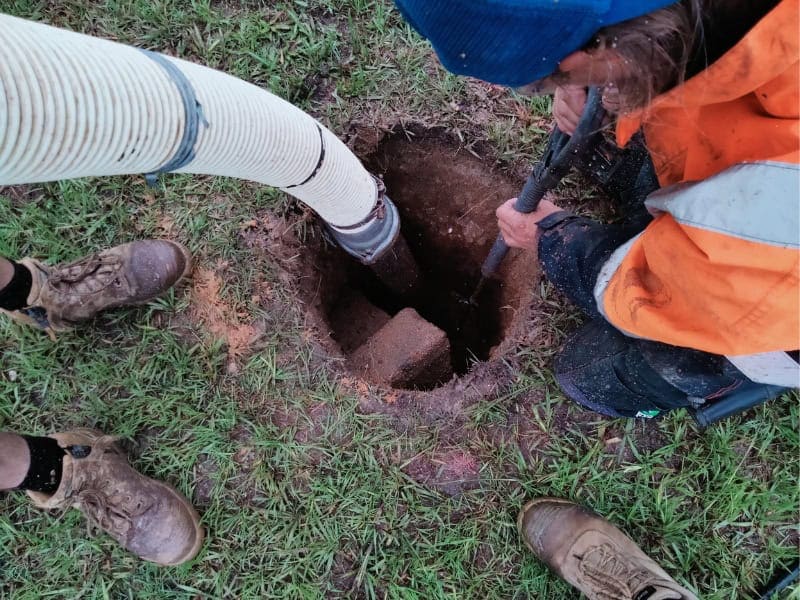
Hydro Excavation: The Ultimate Guide to Non-Destructive Digging
When it comes to digging around sensitive underground assets, the old ways just don’t cut it anymore. Traditional excavation methods, while they have their place,
carry significant risks of damaging buried utilities, leading to costly repairs, dangerous situations, and project delays. That’s where hydro excavation, a leading form of non-destructive digging (NDD), steps in. This method, also known as vacuum excavation or hydrovac, is revolutionising how we approach subsurface work. For contractors, project managers, and asset owners in South East Queensland and beyond, understanding hydro excavation is key to safer, more efficient projects. This
guide offers a deep dive into this indispensable technique.
How Does Hydro Excavation Work? The Science Behind the Slurry
At its core, hydro excavation is a remarkably elegant process. It combines the power of highly pressurised water with a robust industrial vacuum system. First, a specialised lance directs a precise stream of water to liquefy, break up, and cut through the soil. This might involve varying water pressures, often between 2,000
and 3,000 PSI, depending on the soil type. Clay, loam, sand, and even compact or frozen ground each respond differently, so skilled operators adjust the pressure and
nozzle type accordingly for optimal results. Different nozzles, from straight jets for cutting to rotating heads for broader loosening, are selected based on the specific
task.
Once the soil is transformed into a slurry – a mix of soil and water – a powerful vacuum system, connected to a large debris hose, sucks it up. This slurry is then safely contained within a debris tank on the hydrovac truck. The vacuum power, measured in Cubic Feet per Minute (CFM) and inches of mercury (for lift), is crucial for efficiently removing the dislodged material, even from considerable depths. This method, as detailed by industry leaders like Vermeer Australia and Vorstrom, ensures a clean and controlled excavation.
The Wide World of Hydro Excavation Applications
The primary and most critical application of hydro excavation is safely exposing underground utilities. Think of the complex network of gas lines, water mains, electrical cables, and telecommunication lines beneath our feet. Hydro excavation allows for their precise location and exposure without the risk of damage inherent in mechanical digging. This is often referred to as potholing (creating small test holes) or daylighting (exposing a utility for visual confirmation).
But its uses extend far beyond just finding pipes and cables. Hydro excavation is invaluable for:
- Trenching and Slot Trenching: Creating narrow trenches for installing new utilities or conduits.
- Debris Removal: Cleaning out pits, drains, and culverts, or removing spills and contaminated soil.
- Pole and Sign Post Installation: Excavating precise holes for foundations with minimal ground disturbance.
- Cold Weather and Remote Location Excavation: Its effectiveness isn’t hampered by frozen ground, making it ideal for challenging conditions.
- Environmental Remediation: Safely removing contaminated soil without spreading pollutants.
Companies like Pressure Works and CSA Specialised highlight the versatility of this technique across various civil and construction projects.
Unearthing the Benefits: Why Choose Hydro Excavation?
The shift towards hydro excavation isn’t accidental; it’s driven by a host of tangible benefits.
- Safety First: This is paramount. By virtually eliminating the risk of striking and damaging underground utilities, hydro excavation significantly reduces the danger to personnel and the public. Fewer utility strikes mean fewer service disruptions and potential hazards.
- Precision and Accuracy: The controlled nature of water jetting allows for incredibly precise digging. This means a smaller excavation footprint, less disruption to the surrounding area, and minimal collateral damage to nearby structures orlandscaping.
- Efficiency and Speed: Hydro excavation can often be faster than manual or even some mechanical methods, especially in congested areas or when dealing with unknown utility locations. This leads to quicker project completion times.
- Cost-Effectiveness: While the initial outlay might seem comparable, the long-term savings are substantial. Reduced utility repair costs, less backfill material needed, lower labour costs due to increased speed, and minimised restoration expenses all contribute to a better bottom line. TDG Environmental often emphasises these cost benefits.
- Environmental Responsibility: Hydro excavation causes less ground disturbance than traditional methods. The excavated spoil is contained, preventing runoff and contamination, and it can often be reused on-site if suitable.
- Versatility: Hydrovac trucks can operate in tight spaces, on uneven terrain, and even at a distance from the actual excavation point using extended hoses, providing access where larger machinery can’t go.
Gearing Up: Hydro Excavation Equipment and Essential Maintenance
The workhorse of hydro excavation is the hydrovac truck, a sophisticated piece of machinery. Key components include:
- Water Tanks and Pump Systems: These store and deliver the high-pressure water needed for excavation.
- Vacuum Systems: These come in two main types: fan systems, which move large volumes of air, and positive displacement (PD) blowers, which offer
- deeper vacuum capabilities. The choice depends on the typical job requirements.
- Debris Tanks: These tanks hold the excavated slurry. Their capacity varies, and they are designed for safe and efficient emptying.
- Booms, Hoses, and Wands: The boom manoeuvres the vacuum hose, while various wands and nozzles allow for precise water application.
- Specialised Equipment: Smaller trailer-mounted units are available for sites with limited access, and remote digging attachments can extend reach even further.
Maintaining this hydro digging equipment is crucial for performance, longevity, and safety. Consistent hydro excavation equipment maintenance, as any operator from irms like D-Tech Non Destructive Digging or Precision Hydro would attest, is non-negotiable.
Routine upkeep includes:
- Daily Checks and Cleaning: Inspecting and cleaning nozzles, filters, and ensuring the debris tank is emptied regularly to prevent material hardening.
- Water System Care: Flushing lines to prevent clogs, checking for leaks, and ensuring pump integrity.
- Vacuum System Upkeep: Regularly inspecting hoses for wear and tear, cleaning filters to maintain suction power, and checking blower oil levels.
- Debris Tank Management: Prompt emptying and thorough cleaning are vital to prevent corrosion and build-up that can reduce capacity and cause damage.
- Lubrication Schedules: Adhering to manufacturer recommendations for lubricating moving parts.
- Winterisation Procedures: In colder climates, specific steps are needed to prevent freezing and damage to water systems.
Proper care of your non destructive digging machine ensures it’s always ready and
reliable.
Digging Safely: Hydro Excavation Safety Protocols (with a Focus on South East Queensland)
Safety underpins every aspect of hydro excavation. While the method itself is inherently safer than traditional digging, rigorous protocols are essential.
Universal Safety Principles for Hydro Excavation:
A thorough site assessment and meticulous planning are the first steps. This includes lodging a “Dial Before You Dig” enquiry (or using the local equivalent) to obtain plans for all known underground utilities. However, these plans are indicative, so physical locating using electronic utility locators, often performed by specialists like Geoscope Locating, is crucial before breaking ground. Appropriate Personal Protective Equipment (PPE) is mandatory, typically including safety glasses or face shields, hearing protection, hard hats, waterproof gloves, high- visibility clothing, and steel-capped boots. Operator training and competency are vital. Understanding the equipment, soil conditions, and potential hazards is key. Emergency preparedness, including knowing shutdown procedures and first aid, is also critical.
Spotlight: Hydro Excavation Safety in South East Queensland
In South East Queensland, specific regulations and codes of practice govern excavation work. Adherence to the Queensland Excavation Work Code of Practice 2021 is non-negotiable. This code outlines requirements for risk assessment, control measures, and emergency plans. Furthermore, authorities like Seqwater have their own stringent procedures, such as PRO-00302, for any excavation on or near their assets. This usually involves obtaining permits and adhering to strict controls to protect critical water infrastructure.
A comprehensive Safe Work Method Statement (SWMS) must be developed for all high-risk construction work, including hydro excavation projects. This document
details the tasks, identifies potential hazards, and outlines control measures. For excavations deeper than 1.5 metres, Queensland regulations require measures to ensure ground stability, such as shoring, benching, or battering. In some cases,
these measures may need to be designed or certified by a Registered Professional Engineer of Queensland (RPEQ).
Working near overhead powerlines requires maintaining safe clearance distances, and specific protocols apply if underground electrical assets are present. The proper management and disposal of excavated spoil must also comply with local environmental regulations in South East Queensland. Companies operating in
Brisbane, the Gold Coast, Ipswich, and the Sunshine Coast must be well-versed in these local requirements.
Hydro Excavation vs. Other Methods
When compared to traditional mechanical excavation using backhoes or excavators, hydro excavation offers significantly lower risk of utility damage, greater precision, and often less site disruption. While mechanical methods might be faster for bulk earthmoving in clear areas, their lack of precision makes them unsuitable for delicate work around utilities.
Compared to other NDD methods like air excavation (using compressed air instead of water), hydro excavation is generally more effective in compact or clay-based soils. Air excavation can be advantageous in very loose soils or where water usage is a concern.
The Future of Hydro Excavation
The adoption of hydro excavation continues to grow as more industries recognise its benefits. Technological advancements are leading to more efficient vacuum systems, improved water pump technology, and even semi-autonomous features on some units. The emphasis on damage prevention and workplace safety will only further drive its popularity.
Conclusion: Digging Smarter, Safer, and More Efficiently
Hydro excavation has firmly established itself as the gold standard for non-destructive digging. Its ability to safely and precisely excavate around vital underground infrastructure, coupled with its efficiency and environmental benefits, makes it an indispensable tool for modern construction and maintenance. For projects in South East Queensland and across Australia, choosing hydro excavation means choosing a smarter, safer, and more efficient approach to underground work.
Frequently Asked Questions (FAQs) about Hydro Excavation
How deep can hydro excavation go?
Hydro excavators can typically dig to depths of 6 to 9 metres (around 20-30 feet). With specialised extensions and powerful vacuum systems, some units can reach depths of up to 20 metres (approximately 70 feet) or even more, depending on the equipment and ground conditions.
What PSI is used for hydro excavation?
The water pressure (PSI) used for hydro excavation generally ranges from 2,000 to 3,000 PSI. However, skilled operators adjust this pressure based on the soil type and
the sensitivity of nearby utilities. Lower pressures might be used for very soft soils or when working extremely close to fragile assets.
Is hydro excavation expensive?
While the hourly rate for hydro excavation might seem higher than some traditional methods, it’s often more cost-effective in the long run. This is due to reduced risks of costly utility strikes and repairs, faster project completion in many scenarios, less need for extensive restoration, and often lower labour costs. The overall project cost is frequently lower when hydro excavation is employed strategically.
Can hydro excavation be used in all soil types?
Yes, hydro excavation is effective in a wide variety of soil conditions, including clay, silt, sand, gravel, and even frozen ground. The operator will adjust water pressure
and nozzle types to suit the specific soil conditions for optimal performance.
What’s the difference between hydrovac and excavation?
“Excavation” is a broad term for any process of moving earth, rock, or other materials. “Hydrovac” specifically refers to hydro excavation, which is a type of excavation that uses pressurised water and a vacuum system. It’s a non-destructive digging method, unlike traditional mechanical excavation which uses buckets and blades.